
Stovetop popcorn in a pot, with pul biber and pekmez caramel
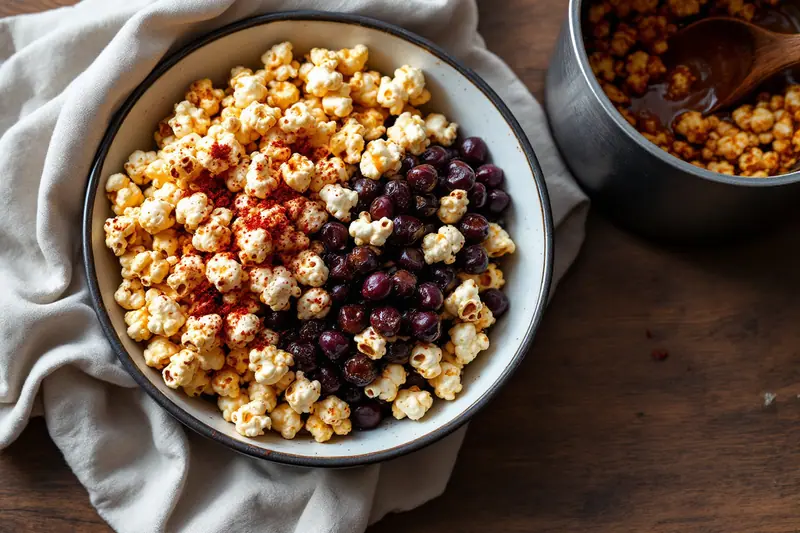
Popcorn is the one snack in our house that nobody plans. Somebody says "film?", somebody else goes to the cupboard, and ten minutes later there is a bowl on the sofa. For years I made it badly: chewy, half-burnt at the bottom, a third of the kernels left hard and unpopped. Then I spent a few evenings making batch after batch side by side, changing one thing at a time, and the method below is what came out of it. You need a heavy pot with a lid, a little oil, salt and about eight minutes.
The two toppings come from a Turkish cupboard rather than a cinema. One is pul biber (mild red pepper flakes) with sumac and a pinch of salt, which tastes like the crust of a good lahmacun. The other is a quick caramel made with pekmez, the dark grape molasses many Turkish families keep for breakfast. It sets into a thin, slightly bitter shell that is far less sweet than toffee popcorn.
What actually matters
The pot
Use the heaviest pot you own with a base at least 20 cm wide, something around 4 to 5 litres. A wide base lets the kernels sit in one layer, so they all reach popping heat at the same time. A thin pan heats in hot spots: the kernels over the flame pop and then scorch while the ones at the edge are still waiting. My cast-iron casserole and a thick stainless steel stockpot both worked well. A light aluminium pan with a thin base gave me the most burnt bits and the most unpopped kernels.
The oil
You want an oil that is happy at high heat and does not taste of much: sunflower, corn or a light rapeseed oil. Olive oil works but smokes earlier and makes the popcorn taste faintly of olives, which is pleasant with sumac and odd with caramel. Butter on its own burns long before the kernels pop, so if you want butter, melt it separately and pour it over at the end.
As for quantity, I tried 1, 2 and 3 tablespoons of oil for half a cup of kernels. With 1 tablespoon the kernels at the edge never quite got coated and many stayed hard. With 3 tablespoons almost everything popped and the popcorn was crisp, not greasy, because most of the oil goes into the kernels as they burst. Three it is.
The three-kernel test
Put the oil and just three kernels in the cold pot, cover and set it over a medium-high heat. When all three have popped, the oil is at the right temperature. Take the pot off the heat, tip in the rest of the kernels, shake once to coat them and leave the pot off the heat for 30 seconds. This short pause brings every kernel up to nearly the same temperature, and then they pop more or less together when the pot goes back on the flame. In my side-by-side batches this was the change that made the biggest difference to the number of hard kernels left at the bottom.
Why the lid sits ajar
Each kernel releases a puff of steam as it bursts. With the lid shut tight, that steam stays in the pot and condenses on the popcorn, which turns it chewy within minutes. Push the lid slightly to one side so there is a gap of about a finger's width, or use a lid with a steam hole. A few kernels may escape onto the hob. That is a fair price for popcorn that stays crisp.
Shaking and stopping
Once the popping starts in earnest, slide the pot back and forth over the burner every 10 to 15 seconds, holding the lid on with a tea towel. Do not lift the pot high; just keep the kernels moving. Listen rather than look. When the gaps between pops stretch to two or three seconds, take the pot off the heat straight away and tip the popcorn into a big bowl. The last few kernels are not worth the smell of burnt sugar on the base of the pot.
A timing plan for one batch
This is roughly how it goes on my gas hob with a cast-iron pot. An induction plate is a minute or two quicker.
| Time | What happens |
|---|---|
| 0:00 | Oil and three kernels in the pot, lid on, medium-high heat |
| 2:30 to 3:00 | The three test kernels pop |
| 3:00 | Off the heat, add the rest, shake, wait 30 seconds |
| 3:30 | Back on the heat, lid ajar |
| 4:30 | Popping starts, shake every 10 to 15 seconds |
| 6:00 to 6:30 | Popping slows to one every few seconds, tip into the bowl |
Half a cup of kernels gives roughly 12 to 14 cups of popcorn, enough for four people on a sofa. For a bigger crowd, make two batches rather than one huge one. A pot that is too full steams the popcorn and pushes the lid off.
Seasoning so it sticks
Fine salt sticks better than flakes. I grind ordinary salt to a powder in a mortar, or use a fine table salt, and sprinkle it on while the popcorn is still hot and faintly oily, tossing the bowl as I go.
For the pul biber version, mix the flakes, sumac and salt in a small bowl first so they spread evenly. Sumac adds a sour, almost lemony taste; pul biber brings warmth rather than real heat. If you want it to cling better, warm a tablespoon of butter or olive oil, drizzle it over the popcorn, toss, and then add the spice mix. You can read more about these two spices in our guide to Turkish pantry spices.
For the pekmez caramel, everything has to be ready before you start, because caramel waits for nobody. Pop the corn, tip it into the largest bowl you have and pick out any unpopped kernels. Then melt the butter, sugar and pekmez together, let it bubble for two minutes, stir in a pinch of bicarbonate of soda (it foams up and makes the caramel lighter and easier to bite) and pour it over the popcorn while you stir with two spoons. Spread everything on a lined tray to cool for 10 minutes. It firms up and comes apart in small clusters.
Recipe
Stovetop popcorn with pul biber or pekmez caramel
About 12 to 14 cups popped, serves 4 as a snack
- Prep
- 5 min
- Cook
- 10 min
- Rest
- 10 min
- Total
- 25 min
Popcorn
- 3 tbsp45 ml sunflower or corn oil
- 1/2 cup100 g popcorn kernels
- 1/2 tsp3 g fine salt
Pul biber and sumac topping
- 1 tbsp15 g butter or olive oil, melted (optional)
- 1 tsp2 g pul biber (Turkish red pepper flakes)
- 1 tsp3 g ground sumac
Pekmez caramel (instead of the spice topping)
- 2 tbsp30 g butter
- 3 tbsp40 g light brown sugar
- 3 tbsp45 ml grape pekmez (grape molasses)
- 1 pinch1 pinch bicarbonate of soda
Method
- Put the oil and three kernels in a heavy pot about 20 cm wide, cover and set over a medium-high heat.
- When all three kernels have popped, after about 3 minutes, take the pot off the heat.
- Tip in the rest of the kernels, shake once to coat them in oil and leave the pot off the heat for 30 seconds.
- Return the pot to the heat with the lid pushed slightly to one side so steam can escape.
- Once the popping gets going, slide the pot back and forth over the burner every 10 to 15 seconds, holding the lid with a tea towel.
- When the pops slow to one every two or three seconds, take the pot off the heat and tip the popcorn into a large bowl at once.
- For the savoury version, sprinkle over the salt, drizzle with the melted butter or oil, then toss with the pul biber and sumac.
- For the caramel version, pick out any unpopped kernels, then melt the butter, sugar and pekmez in a small pan and let it bubble for 2 minutes.
- Stir the bicarbonate into the caramel, pour it over the popcorn while stirring with two spoons, sprinkle with the salt and spread on a lined tray to set for 10 minutes.
Cook's notes
- If more than a tablespoon of kernels stays unpopped, your pot is too thin or the heat too low; try the next batch a notch hotter.
- Plain popcorn keeps crisp for a day in a sealed jar; the caramel version keeps for three days.
When it goes wrong
Most popcorn problems have a simple cause, and after many test batches I can usually tell from the bowl what happened.
- Chewy popcorn. The lid was shut tight, or the popcorn sat in the pot after it finished. Leave the lid ajar and tip it out the moment the popping slows.
- Lots of hard kernels. The heat was too low, the pot too thin, or the kernels are old. Kernels dry out over months in an open jar, and dry kernels pop poorly. Keep them in a closed jar, not the paper bag they came in.
- Burnt smell, black bits on the base. The heat was too high for your pot or you stopped shaking. Turn the flame down one notch and keep things moving.
- Seasoning slides off. Add it while the popcorn is hot, use fine salt, and use a little melted butter or oil as glue.
Other things from the cupboard
Once the basic method is reliable, the bowl becomes a place to try things. A spoon of dried mint with lemon zest and salt is fresh and a little unusual. Cumin with a pinch of chilli tastes like a pot of lentils, in a good way. Cinnamon and sugar over the butter version reminds my children of fairground stalls. If you like crunchy pulse snacks too, our roasted chickpea crisps use the same idea of seasoning while hot, and more of these small techniques live under kitchen notes.
The one thing I would not change is the oil and the heat. Three tablespoons, three test kernels, a gap under the lid, and a big bowl waiting on the counter before you start.
Filed under Kitchen Notes

Murat's family is from the Black Sea coast; he lives in Rotterdam. He likes to test things side by side: soaking times, oven temperatures, bread doughs, chickpeas cooked five ways, and the weeknight plans that come out of it.